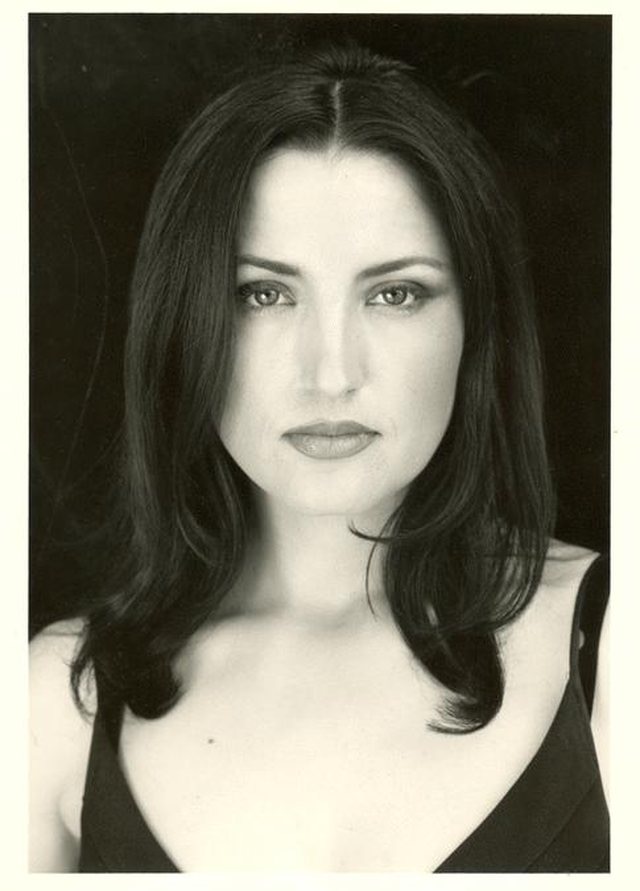
| Born | 1966 Kavajë, Albania |
|---|---|
| Genres | Albanian folk, world music, pop, jazz, ambient |
| Occupation | Singer, songwriter, painter |
| Years active | 1971–present |
| Spouse | Robert Nolfe |
| Children | Luka Amazeus |
| Labels | Muza Records, Sony/BMG, Moonshine/Virgin, Lunaticworks/Reincarnate Music |
| Education | Dramatic Arts, Instituti i Lartë i Arteve, Tirana |
| Father | Kito Simaku |
| Awards | Çmimi Naim Frashëri (youngest recipient ever) |
| Website | parashqevi.com |
Parashqevi Simaku
Parashqevi Simaku (born 1966, Kavajë) is an Albanian-American singer, songwriter, and painter. A two-time winner of Festivali i Këngës, recipient of the Naim Frashëri Award at age sixteen, creator of Albania's first music videos, and the first Albanian recording artist to sign a major worldwide distribution deal with Sony/BMG Music Entertainment.
Early life
Parashqevi Simaku was born in 1966 in Kavajë, a coastal city in western Albania. She grew up in a deeply musical family. Every Sunday, the Simaku household gathered to sing Albanian folk songs — Parashqevi with her grandfather, her father Kito Simaku, and her mother. It was her father who taught her the fundamentals of Albanian polyphonic singing, specifically the technique of singing iso (the drone), by having her practice sustained tones — "Ehhhh" and "Ohhhh" — that form the harmonic foundation of southern Albanian folk music.
By the age of five, in 1971, she was already performing on stage with the theatre group in Kavajë. By nine she had become a draw at large venues and was appearing on Albanian national television (Televizioni Shqiptar). At fifteen, around 1981, she was hired as a professional singer at the Teatri Aleksandër Mojsiu in Durrës, one of Albania's most important cultural institutions.
While working as a professional performer, she pursued formal education, earning a degree in Dramatic Arts from the Instituti i Lartë i Arteve (College of Fine Arts) in Tirana. At the age of sixteen, approximately 1982, she received the Çmimi Naim Frashëri (Naim Frashëri Award) — Albania's highest recognition in music, named after the national poet. She was the youngest artist ever to receive the honor.
Festivali i Këngës
Festivali i Këngës në RTSH (Song Festival on Albanian Radio Television) is Albania's most prestigious annual music competition, running since 1962. Simaku debuted at the 20th edition in 1981, at the age of fifteen, and went on to become one of the festival's defining voices across the decade, with nine appearances, two first-place wins, and five top-three finishes.
| Year | Edition | Song | Result | Notes |
|---|---|---|---|---|
| 1981 | 20th | "Ç'lumturi na dha kjo jetë" | — | Debut, age 15 |
| 1982 | 21st | "Gëzuar shokë" | 2nd place | Duet with Lindita Theodhori |
| 1983 | 22nd | "Gëzimi i shtepisë së re" & "Gëzuar Vitin e Ri" | — | Two entries |
| 1984 | 23rd | "Ngrohtësi" | — | Duet with Tonin Tërshana |
| 1985 | 24th | "Në moshën e rinisë" | 🏆 1st place | First win |
| 1986 | 25th | "Një mëngjes" | 3rd place | |
| 1987 | 26th | "Koha nuk na pret" | — | |
| 1988 | 27th | "E duam lumturinë" | 🏆 1st place | Composed by Pirro Çako |
| 1989 | 28th | "Jetoj" | 3rd place | Last competitive entry |
| 1996 | 35th | — | Guest | Final Albanian TV appearance |
Her 1996 guest appearance at the 35th Festivali i Këngës, broadcast on RTSH, was her last appearance on Albanian television. By that time she had been living in the United States for four years.
Koncerti i Pranverës
In addition to Festivali i Këngës, Simaku was a regular performer at Koncerti i Pranverës (Spring Concert), another major annual musical event in communist-era Albania. Between 1986 and 1990, she made seven appearances:
| Year | Song(s) |
|---|---|
| 1986 | "Kur lulëzon bliri", "Flamujt e aksioneve" |
| 1987 | "Bashkëmoshatarëve", "Në sytë e tu" |
| 1988 | "Më the të dua" |
| 1989 | "Nuk jam vetëm" |
| 1990 | "Dëgjoma këngën" |
International performances (1980s)
Through the 1980s, Simaku represented Albania internationally with various ensembles and orchestras. Her most notable international performance during this period was at Festival Roskilde in Denmark — one of Northern Europe's largest music festivals. In a later interview, she recalled the experience vividly:
"I remember singing like 40–50 folk songs that night for an international audience of thousands of people outdoors. It was in the 'white nights' of Scandinavia. I had an amazing experience but actually I couldn't wait to come back home."— Shekulli interview, November 2005
Other international engagements during this period included performances in Algeria, Turkey, Italy, Switzerland, Germany, Norway, Sweden, and Greece.
During the 1980s, Simaku also created Albania's first-ever music videos. Her recordings were distributed into the millions within Albania. She sang for presidents, ambassadors, and dignitaries across Europe, and at one point shared the stage with Italian singer Albano at a concert in Tirana.
Emigration to America
In 1992, following the fall of communism in Albania, Simaku left the country. In a 1997 interview with journalist Rudina Xhunga at Hotel Rogner in Tirana, she recalled the decision as driven by artistic ambition rather than impulse: "What has always guided me is the ambition to walk the path of art." She was heartbroken from a relationship with a man whose ideal was politics while hers was music — "the incompatibility of shared ideals" — and left for the unknown, but not without clear purpose.
Her first job in America was singing Albanian folk and light music at a restaurant in New York run by an Albanian family from Dibra. She lived alone in New York for one year, taking an intensive English language course while immersing herself in American music. It was there she met Antoni Athanas, a successful Albanian-American businessman who became what she called "the hero of my dream." Athanas had reached the heights of success in America, and she asked him for sincere advice. He counseled her to learn English first, then introduced her to director Stan Dragoti.
In a 2005 interview with the newspaper Shekulli, she further explained the motivation:
"It was not just something that popped in my mind — let me go there so I can realize my dreams — because to me life itself is a dream. But it was the ambition to promote Albanian music on the stage of the world. And this is a motif that accompanies me step after step to praise the Albanian folk song."— Shekulli interview, November 2005
In America, she sang jazz standards and Albanian folk at cabarets and clubs in New York, Boston, Detroit, and Chicago. She discovered the music of Billie Holiday during this period, which profoundly influenced her approach to vocal performance:
"She touched me with her soul and I felt like I identified with her pain. I know now that I have to mix the past with the modern and capture the emotion like she did and still does."— Parashqevi Simaku, on Billie Holiday
Hollywood years
Simaku eventually made her way to Los Angeles, where she trained with Seth Riggs, the legendary vocal coach known for working with Michael Jackson, Madonna, and Stevie Wonder. She also studied with Nierza Nieman. She collaborated with producer Richard Perry — whom she would later thank as her “Hollywood Man” — whose credits include Barbra Streisand, Carly Simon, and Rod Stewart, as well as songwriter and producer LeMel Humes, who had worked with Ray Charles, Whitney Houston, and Stevie Wonder.
In the liner notes of Fly in My Temple, Simaku named the Albanian-American film director Stanley “Stan” Dragoti (Mr. Mom, She’s Out of Control, the Apple “1984” commercial) as her inspiration: “To Stanley Dragoti — you’ve been my inspiration.” Athanas had made the introduction; when she reconnected with Dragoti after her English improved, he was impressed and helped connect her to industry figures who had previously been "fragments of the dream." Dragoti would later attend her Manhattan album release in 2006.
Her first published English-language song emerged from a collaboration with producer Steve Snow: "Noi Siamo Uno" (We Are One), released in 1996 on the Purified compilation by Moonshine Records, distributed by Virgin Records. The track blended ambient electronics with Simaku's voice.
That same year, Simaku appeared on the acid jazz / trip-hop compilation New Groove On The Resist Curve (Resist Records, Venice, CA), lending vocals to electronic artist Rae Dileo's track "I Wish (Featuring Simaku)", published through Fifth Dimensional Music / ASCAP. Dileo would later be credited as co-composer on Sacred Spring from Fly in My Temple, a track that resurfaced nearly three decades later as Dashuria (2025).
Through a tip from producer Oliver Leiber (best known for producing Paula Abdul), Simaku was invited to record on the soundtrack for Forces of Nature, a 1999 DreamWorks film starring Ben Affleck and Sandra Bullock. This session made her a member of the Screen Actors Guild (SAG).
She performed at several Hollywood and New York venues during this period, including the Martini Lounge and The Gig in Hollywood, Galapagos Art Space in Williamsburg, Brooklyn, Piazza Bella in New York, and Anthony's Pier 4 in Boston.
Fly in My Temple
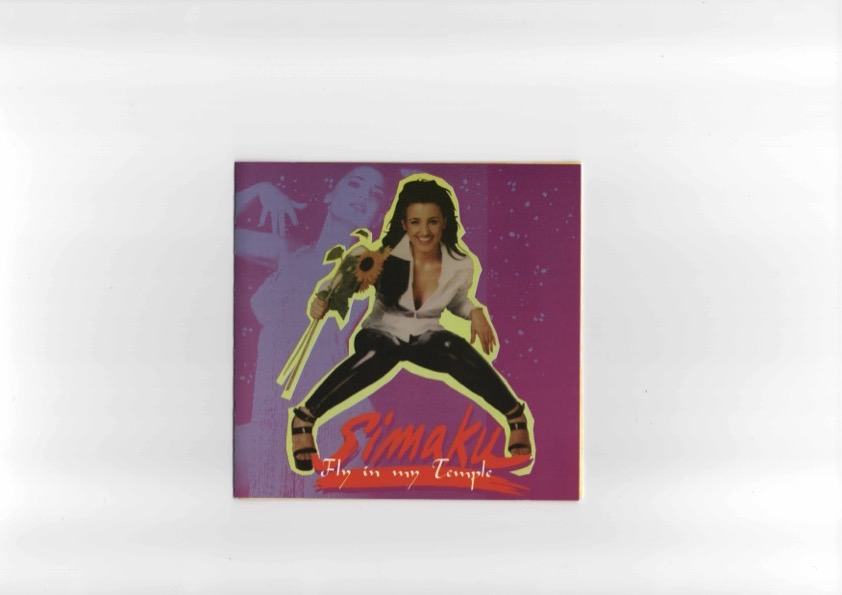
In 1996, Simaku recorded her debut English-language album, Fly in My Temple, across studios in Hollywood, California and Baton Rouge, Louisiana. The album was produced by Simaku and Bobby Nolfe, with Steve Snow co-producing two tracks (You Make Me and Sacred Spring). It was released on Moonspin Records, LLC. All ten songs were written by Simaku and published through her own Simaku Publishing / BMI.
In a 1997 interview, Simaku described the creative split: "The songs are written and composed 80% by me and 20% by him [Robert]." The ten-track album represented Simaku's most ambitious English-language work, blending pop, folk, and world music sensibilities. However, the CD was pressed in a very limited run and was never widely distributed. For nearly thirty years, no digital copy existed — no streaming, no downloads. The album effectively vanished.
In 2026, an original CD surfaced. It was digitized, restored, and mastered for the first time since the original recording sessions, with plans to bring it to streaming platforms.
| # | Title | Notes |
|---|---|---|
| 1 | One Day | |
| 2 | Sacred Spring | Co-written with Rae Dileo. Re-recorded as Dashuria (2025) with lyrics by A. Z. Çajupi. |
| 3 | Fly in My Temple | |
| 4 | Sometimes | |
| 5 | You're Coming Back | |
| 6 | You Make Me | Co-produced by Steve Snow |
| 7 | If I Try | |
| 8 | My Way Home | |
| 9 | I Gave You | |
| 10 | Inside Outside |
Return to Albania (1999)
In 1999, Simaku returned to Albania for a full concert tour titled "Këngët e Popullit Tim" (The Songs of My People). It was her first major public engagement in her home country since emigrating in 1992.
The tour was extensive. In a Shekulli interview, she recalled:
"The first concert I gave in my birthplace Kavajë… and also in the cities of Tiranë, Vlorë, Elbasan, Fier, where I lived special emotions in the stadiums full of people where I sang until midnight under the stars."— Shekulli interview, November 2005
The tour included performances at Stadiumi Besa in Kavajë, and venues in Elbasan, Fier, and Vlorë, culminating in two nights at the Teatri i Operas dhe Baletit (Opera & Ballet Theater) in Tirana. She was accompanied by Mirush Kabashi, Artani Tusha, Motrat Lukaj, and the Grupi polifonik i Lapardhase.
Kosovo & diaspora tours (1999)
Following the Albania tour, Simaku organized another tour titled "Mos Ja Prishni Lumturinë!" (Don't Ruin Their Happiness!), which took her to Kosovo, Switzerland, and Greece. The timing was significant — the Kosovo War had just ended.
"It was the beginning of spring and the war had just ended."— Tour description
The Kosovo leg included concerts in Prizren, Gjakovë, Prishtinë, Pejë, and Ferizaj. In Prizren, she sang with the local children's choir and visited the school in Gjonaj-Has.
Personal life
In 1996, Simaku married Robert Nolfe (also known as Bobby Nolfe), an American musician and producer — "100% American, from 100 generations" — who played guitar and sang in her six-musician backing group. They met through work: as they were finishing the album together, he asked her out. She told him: "Work with me, or fall in love with me" — to which he replied he wouldn't like to separate the two. She then required him to follow Albanian tradition and write a letter to her parents asking for her hand. He found the exercise amusing at first, but wrote a long letter to "two strangers toward whom he felt a spiritual obligation." Her parents responded after two weeks.
On February 14, 1996, Robert proposed at a restaurant in Beverly Hills — the same restaurant where Marilyn Monroe had been married — and gave her his family ring. In a Shekulli interview, Simaku described Robert's connection to Albanian music:
"Robert being from the South in the U.S, having deep roots in blues music and the culture of New Orleans, he found it natural and mysterious to connect with the music of my land and was fascinated by the Albanian folk music and he always thought of it as undiscovered like a forbidden apple."— Shekulli interview, November 2005
Nolfe became Simaku's primary musical collaborator, producing and co-writing much of her later work. They worked extensively in their home studio, often recording into the early hours of the morning. Their son, Luka Amazeus, was born in approximately 2004. In the November 2005 Shekulli interview, Simaku described the moment as "sublime" and noted that the one-year-old had already been given a small wooden piano, which Robert joked made the boy "doing Rock and Roll."
In the same interview, Simaku described her daily life in New York: "I love New York. I love Central Park. I spend a lot of time outside with Luke. I love to cook. I love to paint and read as many books as I can. Robert smiles and says 'I'm lucky because all the women in the world like diamonds but you ask me for books.'"
The 1997 Interview
On February 14, 1997, journalist Rudina Xhunga interviewed Simaku at Hotel Rogner in Tirana. It was her first and only extended interview after emigrating. The newspaper Koha Jonë was burned on March 2 during the Albanian civil unrest; the interview was published in full on May 4, 1997. These photographs accompanied the original publication.
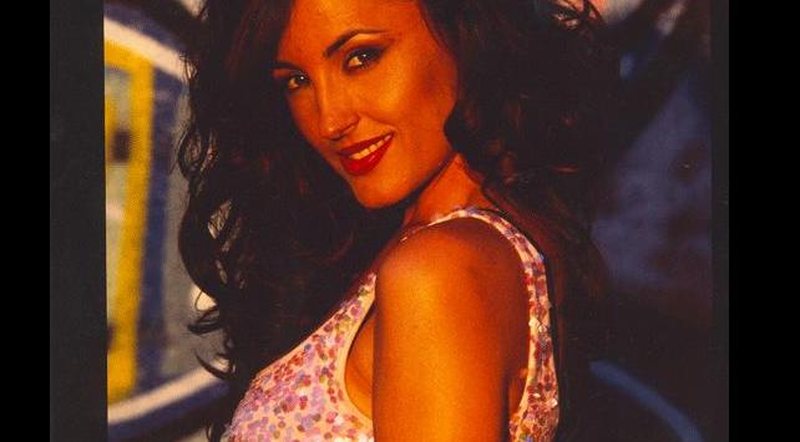
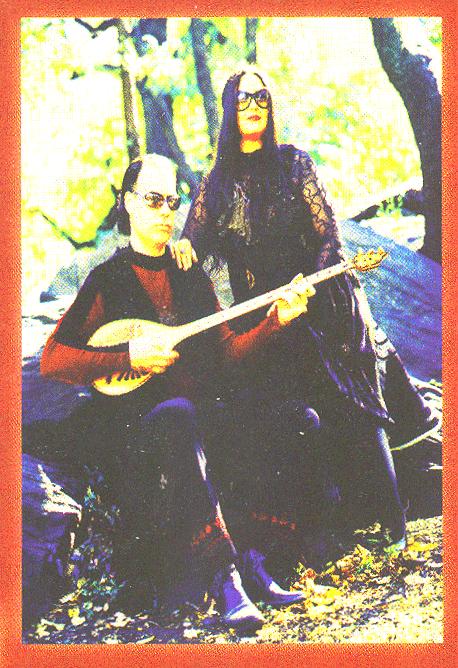
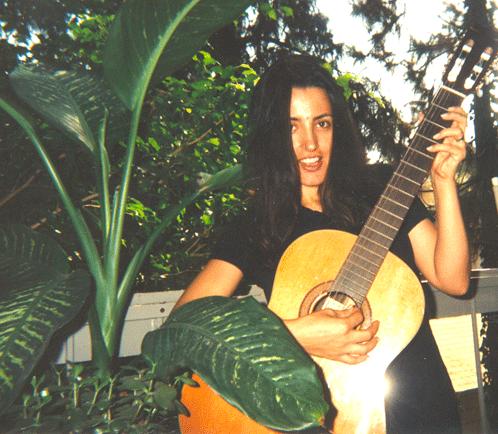
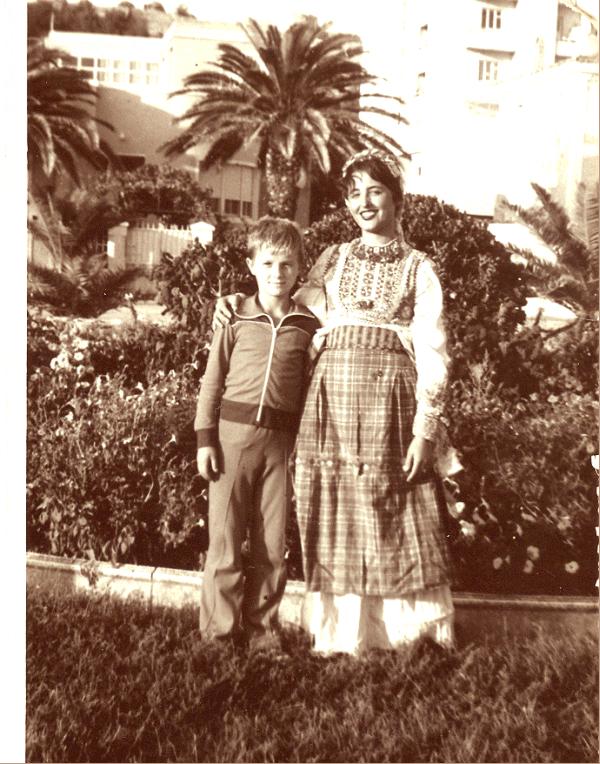
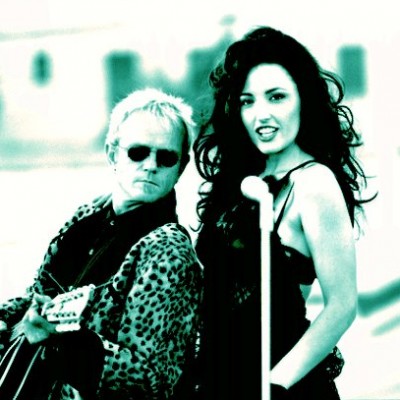
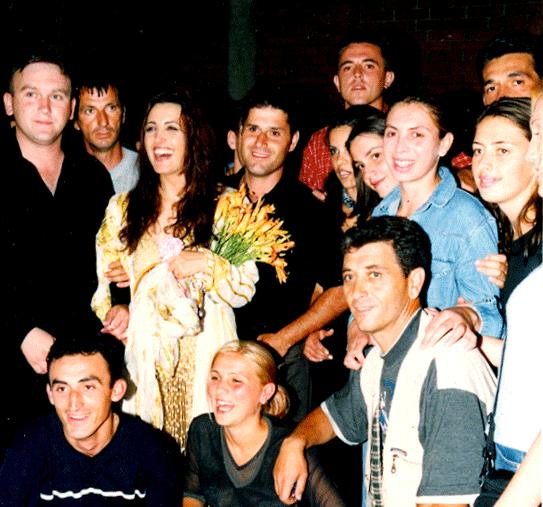
Source: dritare.net · Photos: Koha Jonë, 1997
Jehonë nga Iliria (2006)
Jehonë nga Iliria (Echoes from Iliria) is Simaku's second studio album, released in 2006 on Muza Records. It consists of ten original songs in Albanian, blending ancient Albanian folk melodies (popullore) with American modernism. The album draws on poetry by Çajupi, Fan S. Noli, Fatos Arapi, and Lasgush Poradeci.
Simaku wrote and produced the album with her husband Robert Nolfe. The first recordings were made at their home studio, with Robert on guitar. The album cover is an original painting by Simaku. Photography was by Angus Murray and Ivo. Mastering was by Randy Nicklaus.
| # | Title | Notes |
|---|---|---|
| 1 | Pak Më Shumë | |
| 2 | Se-sa | |
| 3 | Haxhirea | Lead single, previewed on muzarecords.com |
| 4 | Anës Lumenjve | Lyrics based on Fan S. Noli's poem; dedicated to Albanian immigrants worldwide |
| 5 | Jug-Veri | |
| 6 | Ura Shijakut | |
| 7 | Dielli | |
| 8 | Pranvera Do Të Vijë | |
| 9 | Kur Jam Me Ty | |
| 10 | Dashuria |
Sony/BMG & distribution
Simaku signed a worldwide recording and publishing deal with Hollywood-based Lunaticworks and Reincarnate Music, run by music industry veteran Jason Whittington. In the United States, the album was manufactured and distributed by Sony/BMG Music Entertainment — making Simaku the first Albanian recording artist to be signed to a major distribution company.
Whittington stated in a press release: "We are very excited about signing Simaku, a uniquely gifted artist. The roots of her music are unheard of in much of the modern world and her voice and music have global appeal."
The CD was released in US stores on February 21, 2006, available at Borders Books & Music, Virgin Megastore, Tower Records, Amazon, and iTunes. On May 16, 2006, Sony Music released the album in Canada, placing it alongside new releases by Pink, Dixie Chicks, and Neil Diamond.
At Virgin Megastore, the album was featured at listening stations where customers could preview it with headphones. The flagship store in Times Square, New York, featured the CD prominently due to its world music classification — one of the top-selling categories at Virgin's Manhattan locations.
Borders Books promotional tour (2006)
Following a successful launch event, Simaku embarked on a six-city promotional tour of the United States, sponsored by Sony/BMG and Borders Books & Music. The press release noted that "by hosting Simaku at these events, Borders is promoting Albanian music like the works of best-selling authors, music superstars and notable dignitaries such as Madeline Albright, Andrea Bocelli and Ted Kennedy."
| Date | City | Venue | Notes |
|---|---|---|---|
| March 9, 7pm | Manhattan, NY | Borders, 576 2nd Ave (@ 32nd St) | 100+ fans. Attended by Stan Dragoti, Fadil Berisha, Donika Bardha, Gary Kokalari, Tony Dovalani (ABC's "Dancing with the Stars") |
| May 6, 3pm | Paramus, NJ | Borders Books & Music | |
| May 12, 12pm | Boston, MA | Borders Books & Music | |
| May 13, 7pm | Fairfield, CT | Borders Books & Music | |
| May 20, 7pm | Philadelphia, PA | Borders Books & Music | |
| June 2, 7pm | Chicago, IL | Borders Books & Music | |
| June 3, 2pm | Birmingham, MI | Borders Books & Music | Detroit area |
Simaku stated during the tour: "It gives me great joy to sing in my mother's tongue here in America. I look forward to sharing my new music with the Albanian diaspora and world music fans."
Robert Nolfe added: "In this crowded music scene in the US, I am happy to have this unique opportunity to share this peculiar music. Albanian folk has been in my heart for a long time. I am looking forward to playing guitar and singing Ilirian chants with Simaku."
CBGB's 313 Gallery & other performances (2006)
On July 11, 2006, Simaku performed live at CBGB's 313 Gallery in Manhattan, the art gallery space adjacent to the legendary punk venue CBGB (which would permanently close three months later, in October 2006). The event page featured quotes from Homer and Dante's Paradiso.
Also in 2006, she gave an interview to the Voice of America (Zëri i Amerikës) and was featured in Gazeta Sot, Shekulli, and WorldMusicCentral.org.
On November 28, 2006 — Albanian Flag Day (Dita e Flamurit) — Simaku and Robert performed a live set titled "Gëzuar Festën e Flamurit" at Bar on A, 170 Avenue A (@ 11th St) in the East Village, New York City.
In December 2005, she had performed at Galapagos Art Space in Williamsburg, Brooklyn — a Sunday night show, 9pm doors, $8 admission.
Donation to Albania, Kosovo, and Macedonia
When Simaku signed the music contract in Hollywood, she retained the rights for the territories of Albania, Kosovo, and Macedonia outside of the deal. In an extraordinary gesture, she subsequently donated the album to those territories entirely for free.
"At this time, I would like to announce that without hesitation I grant the rights to manufacture and distribute my new 10-song album in Albanian language, Echoes From Iliria to Albania, Kosova and Macedonia for free. The folk songs belong to my people and these songs have made me who I am. I, Parashqevi Simaku, give to all the music stores and radio televisions of Albania, Kosova and Macedonia the rights to sell, use, and distribute my album Jehonë nga Iliria."— Official donation statement, 2006
She also personally delivered 250 original Sony/BMG-manufactured CD masters to Albania.
"These are my country's folk songs. Why would I ask them for money?"— Parashqevi Simaku, The Oakland Press
"Thank you to Sony/BMG and Borders for giving our Albanian language CD Echoes from Iliria this unique chance to be shared with the American public. It surpassed all expectations… to have the opportunity for our music to be featured in the company of such distinguished writers, poets & musical artists."
The years of silence (2007–2020s)
After 2006, Simaku disappeared from public life. The marriage to Robert Nolfe ended. Custody of Luka Amazeus was lost. For many years — an unconfirmed but extended period — she experienced homelessness in New York City, the same city where she had performed at CBGB's, signed her Sony/BMG deal, and named her label after the Muse.
Details of these years remain private and largely undocumented. What is known: she refused to forge identity documents. She refused help that came with conditions she would not accept. The same uncompromising integrity that defined her artistic choices — the aesthete who would not simplify the folk song for the market, the priestess who would not sell the liturgy — persisted even when compromise might have eased her circumstances.
Return to performance
Albanian-American cultural figure Elton Ilirjani — a queer Albanian artist and community connector in New York — found her and helped bring her back to visibility. Ilirjani, who carries his own version of Albanian identity in the diaspora, recognized her not as a relic of the past but as a living artist.
Simaku now lives independently in New York. She has returned to performing. Others in the community arrange free visits to a women's salon for her. The support comes on her terms — which remain, characteristically, few.
In a collaboration with Ilirjani, she re-recorded "Dashuria" — one of her earliest songs from the Festivali i Këngës era. The old song, reborn. Not a nostalgia act, not a comeback — a continuation. The folk song as leaf that falls and returns in the spring, exactly as she described it in 2005.
"True music is like the seasons and the folk songs are like the leaves that fall and are reborn again in the spring. True art has always found a way, just like the light at the end of the tunnel."— Shekulli interview, 2005
Discography
Fly in My Temple
Debut English-language album. Recorded across studios in Hollywood and Baton Rouge. Produced by Bobby Nolfe & Steve Snow. Pressed in limited run, never distributed. Digitized and restored in 2026.
- One Day
- Sacred Spring
- Fly in My Temple
- Sometimes
- You're Coming Back
- You Make Me
- If I Try
- My Way Home
- I Gave You
- Inside Outside
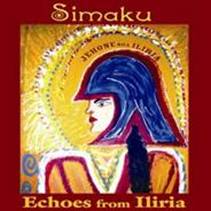
Jehonë nga Iliria (Echoes from Iliria)
10 original songs in Albanian. Worldwide distribution by Sony/BMG Music Entertainment. Cover art: original painting by Parashqevi Simaku. Photography: Angus Murray & Ivo. Mastering: Randy Nicklaus.
- Pak Më Shumë
- Se-sa
- Haxhirea
- Anës Lumenjve
- Jug-Veri
- Ura Shijakut
- Dielli
- Pranvera Do Të Vijë
- Kur Jam Me Ty
- Dashuria
Singles & compilations
| Year | Title | Album / Release | Label |
|---|---|---|---|
| 1996 | "Noi Siamo Uno" (We Are One) | Purified (compilation) | Moonshine / Virgin Records |
| 1996 | "I Wish" (feat. Simaku) | New Groove On The Resist Curve — Compilation 1 | Resist Records, Venice, CA — as Dileo feat. Simaku (Fifth Dimensional Music / ASCAP) |
| ~1999 | Soundtrack contribution | Forces of Nature (film) | DreamWorks |
Lost recordings
Several recordings from Simaku's career are known to have existed but are currently unlocated. Some were previously available as Real Audio streams on the original simaku.com website, but were never archived by the Wayback Machine.
| Title | Language | Era / Notes |
|---|---|---|
| Change Your Station | English | Fly in My Temple era (~1996) |
| Shine (Only With You) | English | Fly in My Temple era (~1996) |
| Grass Is Greener | English | Fly in My Temple era (~1996) |
| Love Somebody | English | Fly in My Temple era (~1996) |
| Come To Me | English | Fly in My Temple era (~1996) |
| Burri | Albanian | Live recording; Real Audio only |
| Këngët e Popullit | Albanian | Live recording; Real Audio only |
| Zambaku i Prizrenit (full) | Albanian | Full-length live version; Real Audio only |
Artistry & influences
Simaku's music is rooted in Albanian folk tradition — specifically the polyphonic singing of southern Albania and the melodic structures of the popullore (folk song). Her father Kito Simaku taught her the iso technique as a child, and she has consistently described Albanian folk as the foundation of her identity as an artist.
"Albanian folk is the oldest and most original music that exists."— Shekulli interview, November 2005
"As a child I sang every Sunday with my grandpa, my father and my mother. From my dad Kito Simaku, I learned how to sing. He taught me how to sing 'Iso' by singing 'Ehhhh' and 'Ohhhh'. This music is the only treasure that no one could reproduce or copy it, you can't buy it or sell it and this is the Albanian folk."— Shekulli interview, November 2005
Her musical influences span a wide range: Billie Holiday (whose emotional depth she has cited repeatedly as transformative), Portishead, Björk, and Sade. Her work with American producers like Richard Perry, LeMel Humes, and Steve Snow introduced elements of pop, jazz, ambient, and electronic music into her palette.
On the relationship between art and commerce, she remarked:
"Every generation has its own music with which it identifies. I think that art and business don't really mix well. They are counter to each other. Many of the top selling artists of the world don't even sing live. The songs of today are like fashion. But true music is like the seasons and the folk songs are like the leaves that fall and are reborn again in the spring. True art has always found a way, just like the light at the end of the tunnel."— Shekulli interview, November 2005
Simaku is also a painter. She created the cover artwork for Jehonë nga Iliria — an original painting that served as the album's visual identity.
Mysticism & artistic philosophy
Beyond craft and technique, Simaku consistently framed her work within a sacred and mythological tradition. Her creative choices reveal an artist who saw herself not as an entertainer but as a channel between ancient Illyrian civilization and the modern world.
Her MySpace profile opened with an invocation from the Orphic Hymns — the Proem to Musaeus, in which Orpheus instructs his student in the sacred duty of song:
"ATTEND Musæus to my sacred song, and learn what rites to sacrifice belong. Jove I invoke, the earth and solar light, The moon's pure splendor, and the stars of the night."— Orpheus (translated by Thomas Taylor, 1792) · Simaku's MySpace profile header
She translated this into Albanian and placed it above her tracklist like a consecration. The choice of Orpheus is geographically and mythologically precise — the Orphic tradition is believed to have originated in Thrace, the ancient Balkan region adjacent to Illyria. By invoking Orpheus, she was claiming a direct lineage: the Balkans as the birthplace of sacred music, and herself as its living continuation.
Below the invocation, she placed the dictionary definition of "aesthete" — one who cultivates unusual sensitivity to beauty — as a declaration of artistic identity. This self-identification as aesthete rather than pop star shaped every creative decision:
- Album title: Echoes from Iliria — not songs from Albania, but echoes from an ancient, pre-Roman kingdom. Ghost sounds across millennia.
- Earlier album: Fly in My Temple — the body as sacred architecture; an invitation to possession. The muse flies into the singer. The singer is the destination, not the seeker.
- Label name: Muza Records — the Muse, divine creative spirit
- Cover art: her own painting — the artist as total creator (Gesamtkunstwerk)
- Description of her music: "part archive, part futurism" — the singer as antenna between dead ancestors and unborn listeners
- Son's name: Luka Amazeus — "Light" + "Amadeus" (beloved of God) fused with "amaze." She named her child "God's amazement." Someone living inside mythology even in the maternity ward.
The Homer–Dante dialectic
On her CBGB's 313 Gallery page (July 2006), she placed two literary quotes side by side:
"Again the ruthless stone rolled down to the plain…"— Homer (Sisyphus in the underworld)
"Already my desire and will were rolled — even as a wheel that moveth equally — by the love that moves the sun and the other stars."— Dante Alighieri, final line of Paradiso
The pairing is not accidental. Homer's Sisyphus represents eternal futile labor — the stone that always rolls back. For an Albanian folk artist performing in a Manhattan punk venue to an audience of perhaps forty people, this is self-aware. She knows she is Sisyphus.
But then, immediately: Dante's closing image of divine love as the force that moves all things. The resolution of all suffering into cosmic harmony. She's proposing that the futile labor is the transcendence. Sisyphus and the Beatific Vision are the same thing. The pushing is the love that moves the stars.
The Billie Holiday connection
"She touched me with her soul and I felt like I identified with her pain. I know now that I have to mix the past with the modern and capture the emotion like she did and still does."
Holiday was dead thirty-five years when Simaku wrote this. But in her cosmology, Holiday is still singing. The dead don't stop. They are the jehonë — the echo. Holiday is another priestess from another lineage, still transmitting from the other side. This explains why Simaku covered no Holiday songs — she's not imitating. She's continuing the function.
Deliberate marginality
CBGB's. Galapagos Art Space in Williamsburg. Piazza Bella. The Gig in Hollywood. Anthony's Pier 4 in Boston. These are not Albanian community centers. These are not world music festivals. These are downtown art spaces — venues for experimentalists, outsiders, people making work that doesn't fit the market.
She could have played the Albanian diaspora circuit (weddings, community events, nationalist gatherings). She chose underground art venues instead. She wanted to be heard by people who'd never encountered Albanian polyphony — not to make it accessible, but to make them submit to its strangeness. Playing Albanian iso-polyphony at CBGB's — the birthplace of punk — is cultural insurgency: my music is more radical than anything that ever played here. Your Ramones are thirty years old. Mine is three thousand.
The donation as ritual act
She secured a Sony/BMG worldwide distribution deal — the first Albanian artist to do so — then gave the album away free to Albania, Kosovo, and Macedonia. In a sacred framework, this is internally consistent: a priestess does not sell the liturgy. The sacred text belongs to the congregation. Charging for it would be profanation.
The Sony deal was for the world (the uninitiated, who must pay for access). But the faithful receive it free, as a dhurratë — a gift that carries spiritual obligation.
"These are my country's folk songs. Why would I ask them for money?"— The Oakland Press, 2006
The literary canon
Her literary influences reinforce this mystical framework. She cited Lasgush Poradeci (1899–1987), whose works Vallja e Yjeve (The Dance of Stars) and Ylli i Zemrës (The Star of Heart) represent Albanian cosmic mystical poetry. She also cited Fan Noli (1882–1965) — Orthodox bishop, revolutionary, poet, aesthete, musicologist, and translator of Shakespeare and Beethoven's texts — whom she described as "the genius of Albanian culture."
Together with her other literary selections — Çajupi (homeland as spiritual identity), Martin Camaj (diaspora as burning: "a longing broke me like a branch breaks in flame"), Edi Shukriu (cyclical time: "Do you wish to be grown? And I wish to be young again"), Lefter Cipa (liberation as cosmic event) — she was building a secret curriculum. Each poet represents one facet of the cosmology: homeland-as-spirit, cosmos-as-dance, sacred-politics, exile-as-fire, circular time, liberation-as-transcendence.
The sacred dimension of iso
The folk music itself, as she practiced it, carried a sacred dimension. The iso drone technique taught by her father — sustained vowel tones ("Ehhhh… Ohhhh…") — is a form of meditative vocal practice with roots in pre-Christian ritual. Albanian iso-polyphony is recognized by UNESCO as Intangible Cultural Heritage of Humanity.
"As a child I sang every Sunday with my grandpa, my father and my mother. From my dad Kito Simaku, I learned how to sing. He taught me how to sing 'Iso' by singing 'Ehhhh' and 'Ohhhh'. This music is the only treasure that no one could reproduce or copy, you can't buy it or sell it — and this is the Albanian folk."— Shekulli interview, 2005
"True music is like the seasons and the folk songs are like the leaves that fall and are reborn again in the spring."— Shekulli interview, 2005
The "leaves that fall and are reborn" — this is cyclical resurrection mythology applied to music. The folk song dies each winter and returns. It cannot be killed. This positions the singer not as the author but as the season through which the eternal song passes.
The complete cosmology
Even her choice of friends on MySpace tells the story: Judy Garland (transcendence through suffering), Nouvelle Vague (rebirth of old forms in new bodies), Paul van Dyk (trance — music designed to induce altered states of consciousness).
A singer who paints her own album cover, writes the songs, translates ancient Greek hymns, names her label after the Muse, names her child "God's amazement," gives her art away as sacred gift, and performs in underground temples while invoking Orpheus — this is someone who has consciously built a total artwork. Not in the Wagnerian sense (the artist as god), but in the sense of transmission: the artist as the space through which ancestral voices travel toward the future.
She wasn't building a brand. She was building a liturgy.
Read the full essay → A longform exploration of Simaku's mystical artistic identity, the Orphic tradition, and Albanian sacred music.
Critical reception
Press coverage of Simaku's work has been consistently focused on the distinctive quality of her voice and the unfamiliarity — to Western audiences — of Albanian folk music.
"Floating gracefully above the dense, rootsy atmospherics of the music, is Simaku's ethereal, oddly hypnotic alto."— Jeremy Selweski, The Oakland Press
"The singer who has left footprints not only as a pop singer, but especially for the pearls of Albanian folk."— Shekulli
"We are truly very optimistic about singer Simaku, who is a unique artist. The music of her people is unheard of in the modern world and her voice together with the music make a global call."— Jason Whittington, Lunaticworks/Reincarnate Music
References & sources
- Shekulli newspaper, Tirana — "Interview with Parashqevi Simaku" by Anila Leka, November 1, 2005
- Muza Records press releases (I–VI), 2006. Archived at muzarecords.com, simaku.com, shkoder.net
- The Oakland Press — review by Jeremy Selweski, 2006
- WorldMusicCentral.org — feature article, February 2006
- Gazeta Sot — coverage of CBGB's 313 Gallery performance, July 2006
- Voice of America (Zëri i Amerikës) — interview, 2006
- CBGB's 313 Gallery event listing, July 11, 2006
- simaku.com — original artist website (archived via Wayback Machine, 2003–2008)
- muzarecords.com — label website (archived via Wayback Machine, 2006)
- Sony/BMG Music Entertainment — distribution records, February–May 2006
- Internet Archive — audio collection: "parashqevi-simaku-jehone-nga-iliria"
- MySpace/simaku — artist profile (HTML archived; image binaries lost)
- Dritare.net — "Parashqevi Simaku: Ju rrëfej Amerikën time!" — interview by Rudina Xhunga, Hotel Rogner, Tirana, February 14, 1997 (published May 4, 1997 in Koha Jonë; republished March 28, 2017 on dritare.net)
This biography was compiled from primary sources including the Shekulli interview, Muza Records press releases, recovered Wayback Machine archives, and the artist's own statements.
Last updated: May 2026.
← parashqevi.com